Any information contained on this Website is not legal advice and should not be treated as such. You should always contact an attorney for help with your specific legal needs and issues. We may also earn a commission when you click links to our partners and purchase goods or services. For more information, read our Disclaimers Policy.
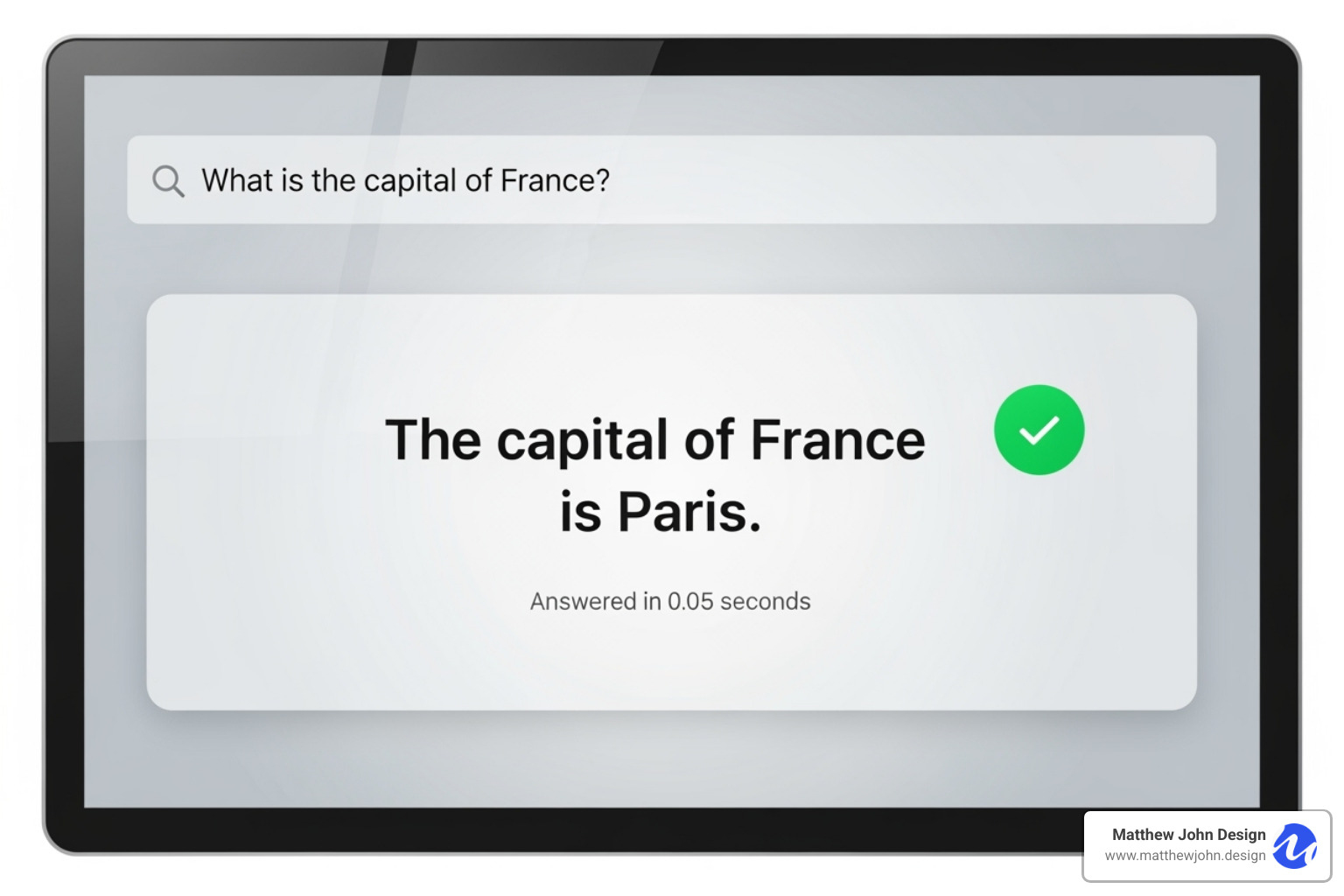
Answer Engine Optimisation (AEO) is the practice of structuring your content so AI-powered platforms can find it, understand it, and deliver it as the direct answer to a user’s question. If traditional SEO is about ranking in search results, AEO is about becoming the answer itself.
This isn’t a future trend to prepare for. Google AI Overviews now appear in nearly 55% of all searches. ChatGPT handles over 2 billion queries daily. Roughly 60% of Google searches end without a single click to an external site. The shift is already well underway — and the good news is that most AEO best practices are the same things that make good SEO.
AEO vs SEO: the difference and why it matters
AEO and SEO aren’t competing strategies — they’re layered. SEO gets you ranked. AEO gets you cited. You generally need the first before you can achieve the second.
The key difference is in what you’re optimising for. Traditional SEO optimises for visibility — you want to appear on page one for a relevant query. AEO optimises for selection — you want AI tools to pull from your content when generating an answer, not just list your page as a source.
Both reward the same fundamentals: high-quality content, E-E-A-T signals (Experience, Expertise, Authoritativeness, Trustworthiness), strong internal linking, and technical hygiene. Where AEO adds an extra layer is in how content is structured — every section needs to be independently understandable, and every key fact needs to be independently citable.
Which answer engines are worth optimising for in 2026
Not all answer engines are equal in terms of where your clients are actually searching. For most small and medium business websites, these are the ones worth focusing on:
- Google AI Overviews — the highest-impact platform for most businesses. Appearing in an AI Overview can generate significant impressions even with low click-through, and the traffic that does click through converts at a higher rate than traditional search traffic.
- ChatGPT Search — with over 400 million weekly active users, ChatGPT’s search features are increasingly used for research and purchasing decisions. It favours conversational, comprehensive content with clear context.
- Perplexity — heavily used by technically literate audiences. Prioritises factual accuracy and cites sources clearly, which means appearing here is a credibility signal in itself.
- Bing Copilot — draws directly from Bing’s index, so traditional Bing SEO practices apply. Worth attention given Bing’s share in some audience segments.
What signals AI tools actually use to select sources
AI answer engines don’t have a separate ranking algorithm you can game. They draw from sources that already perform well in traditional search, with additional weight on a few specific factors:
- Direct, early answers. Place a clear, concise answer within the first 50–60 words of a section. AI tools extract the most citable content from the top of sections, not buried in the middle of paragraphs.
- Clear heading structure. H2s and H3s that match the question being asked make it easy for AI to identify which section answers which query. “What is AEO?” as a heading performs better than “Background and context.”
- Structured data and schema markup. FAQ schema, HowTo schema, and Article schema all give AI tools additional signals about your content’s structure and intent.
- Domain authority and E-E-A-T. AI tools heavily favour sources they’ve been trained to trust. First-hand experience, named authors, citations to primary sources, and a consistent publishing track record all contribute.
- Factual accuracy and specificity. Vague, generalised content gets passed over. Specific, data-backed, experience-grounded content gets cited.
Practical AEO for Webflow sites
Webflow gives you most of the technical foundations you need without additional plugins — but a few things require deliberate setup:
Structured data
Webflow doesn’t have a built-in schema markup generator. For most business sites, the most useful schema types are LocalBusiness, FAQPage, and Article. These are added via custom code in the page’s <head> section as JSON-LD. On CMS-driven pages like blog posts, you can inject dynamic schema using Webflow’s custom code embed with CMS field values — or use a third-party tool like Schema App.
Content structure
Structure every blog post and service page around specific questions your audience is actually asking. Use the question as the H2, then answer it directly in the first sentence below the heading. This isn’t just good AEO practice — it also improves readability and reduces bounce rate.
Technical hygiene
Webflow handles the basics automatically: fast CDN hosting, clean semantic HTML, automatic XML sitemaps. Make sure AI crawlers aren’t blocked in your robots.txt — if you’ve added blanket bot blocking, you may have inadvertently excluded GPTBot and ClaudeBot. Check Site Settings → SEO → robots.txt and confirm you’re not disallowing these crawlers.
Tracking AEO performance
The most accessible signal is Google Search Console: watch for queries with high impressions but unusually low click-through rates. This often indicates your content is appearing in AI Overviews or featured snippets — you’re getting visibility without the click. That’s not a problem, it’s a brand signal worth tracking over time. Tools like Semrush and Advanced Web Ranking now offer AI visibility tracking if you want more granular data.
The honest reality: AEO is a long game
Businesses with strong domain authority and well-structured content typically start seeing AI citations appear within 4–6 weeks of implementing AEO changes. Consistent citation patterns take 3–6 months. There’s no shortcut — the same trust signals that take time to build for SEO are the same ones AI tools use to decide whose content is worth citing.
The upside: the traffic that does come through AI citations converts at significantly higher rates than traditional search traffic. Users who find you via an AI answer have already been told you’re a credible source. They arrive pre-qualified in a way that keyword-traffic visitors rarely are.
Want a Webflow site built for AI visibility from the start?
Matthew John Design builds Webflow sites with clean semantic structure, proper technical setup, and content architecture designed for both traditional search and AI answer engines. Get in touch to talk about your project.