
Any information contained on this Website is not legal advice and should not be treated as such. You should always contact an attorney for help with your specific legal needs and issues. We may also earn a commission when you click links to our partners and purchase goods or services. For more information, read our Disclaimers Policy.
Why Your Website Needs Fresh Content to Thrive
Your website isn't a static brochure; it's a living entity that requires regular care to succeed. Fresh website content involves creating new material and updating existing pages to keep information current, relevant, and valuable. Stale content with outdated stats or old news can quickly erode visitor trust and signal to search engines that your site is no longer a reliable resource.
Quick Answer: Maintaining Fresh Content
- Update existing pages with new data and insights every 3-6 months.
- Publish new content regularly through blog posts, case studies, or resources.
- Refresh timestamps and metadata after substantial updates.
- Monitor performance metrics to find content needing attention.
- Align updates with search intent to ensure relevance.
Freshness is critical for both users and search engines. Google's algorithms, particularly since its "Freshness Update," actively reward up-to-date content, especially for queries about recent events, reviews, or trending topics. This directly impacts your search rankings and visibility.
The benefits are clear: a HubSpot study found that websites publishing over 16 blog posts per month generated nearly 3.5 times more traffic than those posting four or fewer. In this guide, we'll show you how to implement a sustainable content refresh strategy to improve rankings, engagement, and conversions.
The Strategic Guide to Fresh Website Content

Think of your website as a digital storefront. To attract customers, it needs new displays and updated products. Similarly, your website demands continuous content attention as a fundamental part of your SEO and user experience strategy. Fresh website content refers to new material or significantly updated older content. Search engines like Google prioritize current results, so stale content can lower your rankings, while fresh, relevant material signals authority, leading to more frequent crawling and better visibility.
How Search Engines Evaluate Content Freshness for SEO
Google's "Query Deserves Freshness" (QDF) algorithm identifies searches where users expect the latest information, such as "latest smartphone reviews" or breaking news. For these queries, freshness signals are paramount. It's not just about publication frequency but the relevance and novelty of the content itself.
While consistent publishing helps, the quality of each piece is what truly matters. As Google notes, freshness plays a bigger role for news topics than for dictionary definitions. For more technical details, you can refer to Google's official documentation on ranking systems. Even evergreen content—topics that remain relevant long-term—benefits from periodic updates to ensure accuracy and demonstrate expertise, authoritativeness, and trustworthiness (E-A-T).
A Practical Guide to Refreshing Your Website Content
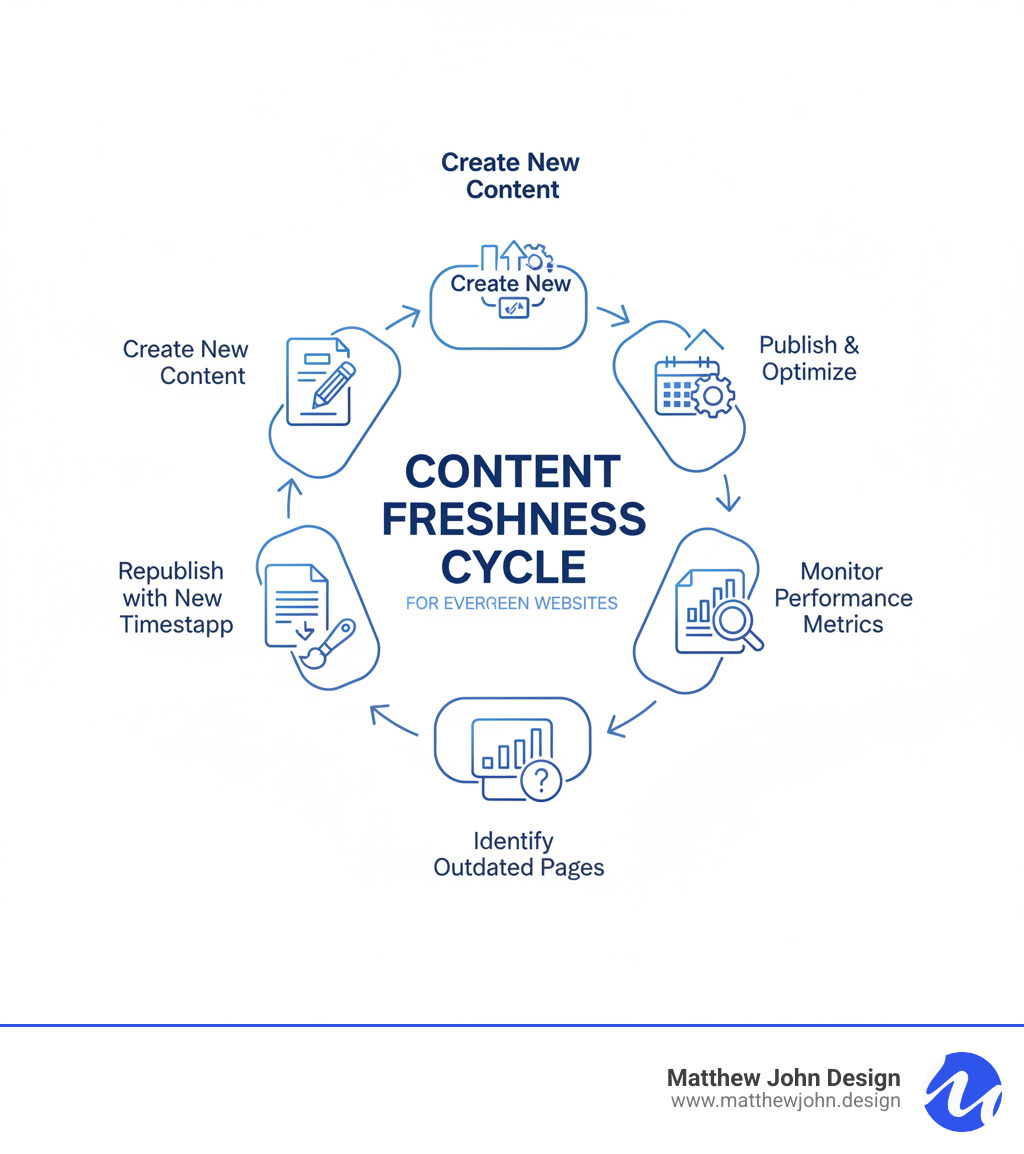
Refreshing existing content is an efficient way to maintain freshness. Start by conducting a content audit every three to six months to identify outdated pages or those with declining traffic. Once you've identified candidates for a refresh, take these key actions:
- Update Information: Replace old statistics and data with current figures.
- Add New Insights: Integrate new trends, research, or developments in your industry.
- Improve Readability: Use headings, bullet points, and new visuals like images or infographics to make content more engaging.
- Optimize for SEO: Update meta titles and descriptions, and check internal and external links to ensure they are relevant and authoritative.
- Repurpose Content: Transform a blog post into an infographic, video, or social media series to extend its reach.
Best Practices for Creating New Fresh Website Content
Regularly publishing new material is equally important for expanding your digital footprint. A successful strategy includes:
- Keyword Research: Use tools like Google Keyword Planner to find relevant topics and long-tail phrases your audience is searching for.
- Content Calendar: Plan topics and publication dates to ensure a consistent flow of fresh material aligned with trends, launches, or industry news.
- Diverse Formats: Go beyond blog posts. Create infographics, videos, podcasts, or interactive quizzes to keep your audience engaged. For larger video files, Webflow only supports background videos up to 30MB, so use a third-party hosting solution like Vidzflow, YouTube, or Vimeo.
- User-Generated Content (UGC): Encourage reviews, testimonials, and comments. UGC adds authenticity and a continuous stream of fresh material to your site.
A well-structured design is key to supporting fresh content. Our Fresh Restaurant Menu Website Template is an example of how modern design can showcase your content effectively from the start.
Measuring, Scaling, and Future-Proofing Your Strategy
Creating and refreshing content is just the beginning. To ensure your efforts are effective, you must measure their impact. This ongoing process of analysis and refinement is what separates stagnant websites from those that consistently grow traffic and conversions.
Using Analytics to Measure the Impact of Freshness
Data from tools like Google Analytics and Google Search Console reveals how your content is performing. Focus on these key metrics to measure the impact of your freshness strategy:
- Organic Traffic: An increase in visitors from search engines after an update.
- Keyword Rankings: Improved positions in search results for your target keywords.
- Engagement Metrics: Higher time on page and lower bounce rates signal that visitors find your content valuable.
- Conversion Rates: An uptick in desired actions, like form submissions or purchases, connecting content to business goals.
- Backlinks: An increase in links from other sites, indicating your content is seen as an authoritative resource.
- Core Web Vitals: Technical metrics that measure user experience, which are supported by well-optimized content.
Overcoming Challenges and Embracing Future Trends
Maintaining fresh content has its challenges, including resource constraints and maintaining consistency. It's easy to prioritize speed over quality, but this approach often backfires. The key is to create a sustainable system for regular content updates, technical upkeep, and security monitoring.
Looking ahead, trends like AI and personalization will reshape content strategy. AI tools can help identify update opportunities and accelerate content creation, but human expertise remains essential for quality and brand alignment. Personalization will require content to be not just current but also highly relevant to specific user segments. These trends underscore a future where content must be genuinely current, useful, and custom to the individual.
The Role of Content in the Overall User Experience
Fresh content serves one purpose: creating an exceptional user experience. This experience begins with technical performance. With a majority of users on mobile, a responsive design is non-negotiable, as poor mobile experiences directly hurt conversion rates.
Technical factors measured by Core Web Vitals—like loading speed and page stability—are also crucial. Fresh, well-optimized content with properly sized images and clean code contributes to better scores and a less frustrating experience for visitors. When users find relevant, current content on a fast, easy-to-use site, they stay longer, build trust, and are more likely to convert.
At Matthew John Design, we understand that content is the foundation of your online presence. Our SEO and content services emphasize creating blog posts and video summaries to keep your site fresh. We build scalable Webflow sites that enable marketing teams to run campaigns and update content without developer delays, pairing high-quality content with an excellent user experience to attract and convert visitors.
.jpg)