Any information contained on this Website is not legal advice and should not be treated as such. You should always contact an attorney for help with your specific legal needs and issues. We may also earn a commission when you click links to our partners and purchase goods or services. For more information, read our Disclaimers Policy.
Why SEO and Content Marketing Are Stronger Together
A content marketing seo strategy is your plan for creating and optimizing content that serves your audience and ranks well in search engines. It involves understanding your audience's problems, creating valuable content to solve them, optimizing it for search, and measuring performance to refine your approach.
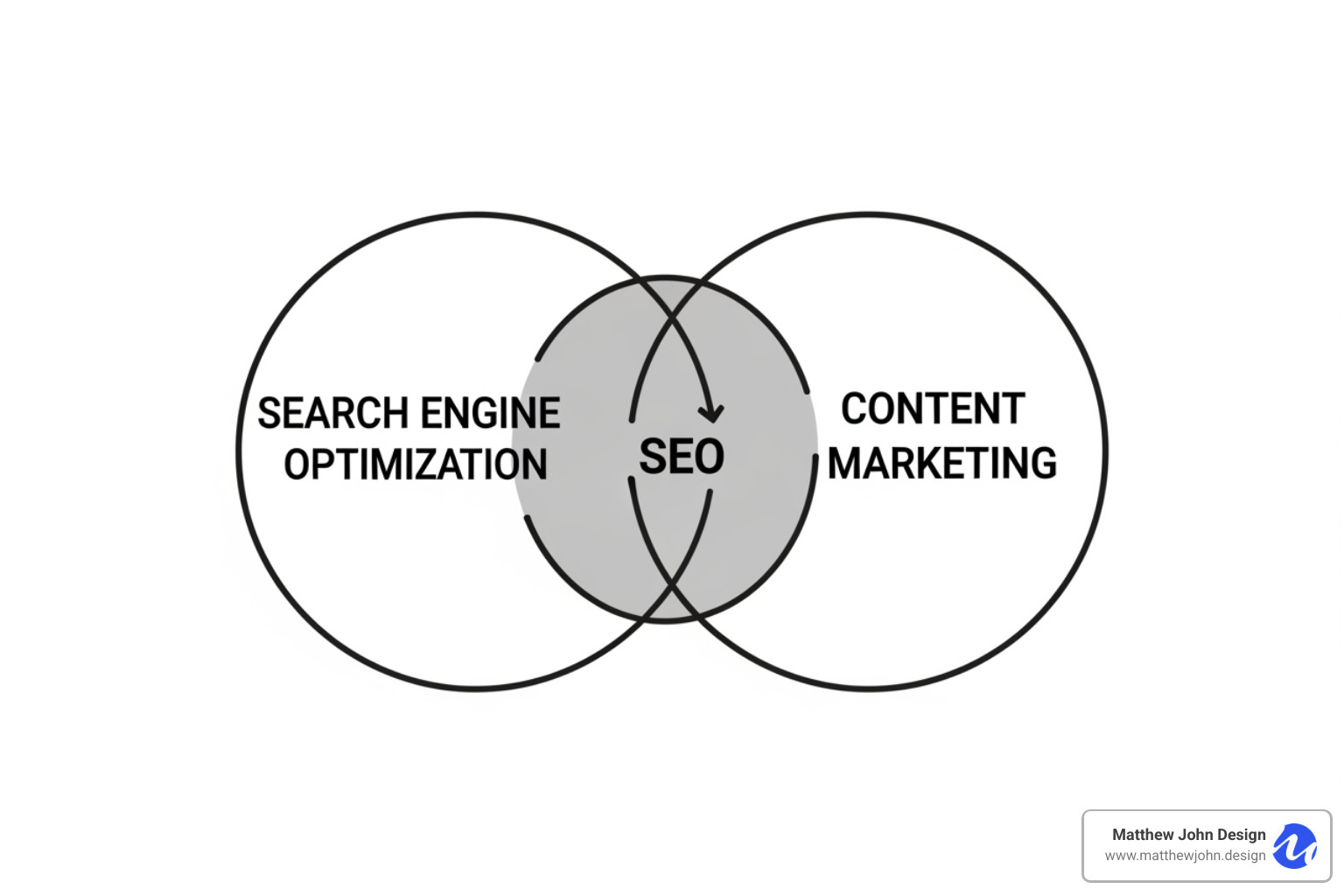
The old debates about content quality versus keyword optimization are obsolete. SEO and content marketing aren't competing strategies—they're two sides of the same coin. With AI-driven search and conversational queries becoming the norm, search engines reward content that genuinely helps people, demonstrates expertise, and satisfies user intent.
Here's the reality: keyword research without quality content is noise, and quality content without SEO strategy is invisible. When combined, they create content that ranks well and converts visitors into customers.
Successful brands build integrated strategies where topic research informs keyword targeting, content demonstrates real expertise (E-E-A-T), and technical optimization supports the user experience. This guide will walk you through the practical steps to build a cohesive strategy that grows your business organically.

Crafting Your Winning Content Marketing SEO Strategy
Building a successful content marketing seo strategy isn't about guesswork. It's a systematic process that aligns your business needs with your audience's searches and what search engines reward. Let's walk through the steps.
Step 1: Laying the Foundation with Audience and Topic Research
Before writing a single word, you must know who you're writing for and what problems they face. This foundational step separates effective content from random blog posts that fail to connect.
Understanding Your Audience's Pain Points
Go beyond basic demographics. To understand your audience's true pain points, questions, and challenges, talk to your customer-facing teams—sales, support, and service. They have a goldmine of insights. Also, visit the online spaces where your audience gathers, like forums, social media groups, and Q&A sites. Tools like Answer the Public reveal the exact questions people are typing into search engines. This research helps build data-backed audience personas, allowing you to focus on topics and keywords that drive business results, not just vanity traffic.
Prioritize Topic Research Over Keyword Research
Many marketers jump straight to keyword tools, but this is a mistake. Start with topic research to identify the broad subjects and problems your audience cares about. This gives you the big picture. Only then should you move to keyword research to find the specific phrases people use, including valuable long-tail keywords. This order matters because Google's sophisticated algorithms prioritize content that genuinely helps people, not just content stuffed with keywords.
Build Authority with Topic Clusters
Organize your content using a topic cluster model. This involves creating a comprehensive pillar page on a broad topic, supported by multiple cluster articles that dive into related, more specific subtopics.
This structure establishes your authority, improves site navigation for users, and signals your expertise to search engines. Throughout this process, understanding user intent is critical. Your content must match what the searcher is trying to accomplish—whether it's to learn, compare, or buy.
For more on this process, see our guide on SEO and Content Creation for Small & Medium Enterprises.
Step 2: Creating Authoritative Content That Stands Out
With millions of blog posts published daily, 'good enough' content is invisible. Your content marketing seo strategy must focus on creating authoritative, unique, and genuinely helpful content.
Finding Your Unique Angle
After your research, it's time for content ideation. Look at what's already ranking for your target keywords to find gaps. The key is to develop a 'content tilt'—a unique angle that highlights your specific expertise. Instead of another generic article, address a specific niche need based on your experience. For example, Jane Friedman's blog post "How to Find a Literary Agent" ranks #1 for a competitive term because it offers deep, experience-based insights that others can't replicate.
Building E-E-A-T Into Your Content
Google's E-E-A-T framework—Experience, Expertise, Authoritativeness, and Trust—is essential for ranking, especially for high-stakes topics. Google wants to serve information from trustworthy sources.
- Experience: Share real case studies, personal insights, and specific examples. Show you've done it, not just read about it.
- Expertise: Showcase your subject matter experts. Feature their credentials, interviews, or direct contributions.
- Authoritativeness: Build this over time by consistently publishing high-quality content and earning backlinks from reputable sites.
- Trustworthiness: Ensure your content is accurate, up-to-date, and transparent with clear sourcing.
The goal is to provide genuine value—fresh perspectives, deeper analysis, or more practical guidance than what's already out there. We follow Google's Search Quality Rater guidelines to ensure our content aligns with what Google values.
Where AI Fits In
AI tools can help generate content briefs, identify topic gaps, and draft content. However, AI is a co-pilot, not the pilot. Human expertise is still required to infuse content with genuine E-E-A-T, unique perspectives, and a brand voice that connects with readers. Learn more in our insights on AI-Driven SEO Content Creation.
Step 3: Mastering On-Page and Technical Optimization
Brilliant content needs a solid technical foundation to be seen and enjoyed. This is where on-page and technical optimization fit into your content marketing seo strategy.
Getting On-Page Elements Right
On-page SEO involves optimizing individual page elements to improve rankings and attract clicks.
- Meta Titles & Descriptions: These are your ads in the search results. Make them unique, concise, and compelling, including your target keyword.
- Headings (H1, H2, etc.): Use headings to create a logical structure for readers and search engines. Your primary keyword should be in the H1, with related terms in subheadings.
- Keyword Integration: Weave keywords and related terms naturally into your content. Write for humans first; readability is key.
- Image Optimization: Use high-quality, compressed images with descriptive alt text for accessibility and SEO. Tools like TinyPNG or Squoosh help keep pages fast.
- Video Content: When using video, embed it from a third-party platform like YouTube, Vimeo, or Vidzflow to maintain fast page speeds. Native hosting (like Webflow's for background videos) is often limited in size. Optimize your video's title and description on its hosting platform to capture search traffic.
- Internal Linking: Link to other relevant pages on your site to guide visitors and distribute SEO value. A strong internal linking strategy can significantly boost page performance.
For a deeper dive, read our guide on How to Incorporate SEO Principles into Content Creation.
Technical Foundations: Mobile and Speed
With mobile-first indexing and over half of searches happening on phones, mobile optimization is non-negotiable. Your site must use responsive design, load quickly, and be easy to steer on any screen.
Page speed has been a Google ranking factor since 2018 because it directly impacts user experience. Slow pages frustrate users and hurt rankings. We optimize for speed through efficient code, image compression, and server optimization.
Step 4: Auditing, Measuring, and Refining Your Content Marketing SEO Strategy
A content marketing seo strategy is a living document. The final step is a continuous loop of measuring, auditing, and refining your approach based on data.
Why Regular Content Audits Matter
Content isn't a 'set it and forget it' asset. Regular audits are crucial to identify underperforming content, find opportunities for updates, maintain freshness and accuracy, and eliminate duplicate content issues. This proactive approach maintains and improves search visibility over time. Learn more in our guide to a Comprehensive SEO Audit.
Tracking the Right KPIs
Measure what matters to your business. Connect your KPIs to objectives like lead generation or sales. Key metrics to track include:
- Organic Traffic: How many visitors find you via search.
- Keyword Rankings: Your position in search results for target terms.
- Click-Through Rate (CTR): The percentage of searchers who click your result.
- Bounce Rate: The percentage of visitors who leave after viewing only one page.
- Conversions: The ultimate goal, whether it's a sale, sign-up, or download.
- Backlinks: Links from other sites, which signal authority.
- Dwell Time: How long users stay on your page after clicking from search. High dwell time is a powerful signal that your content is satisfying user intent.
Using Engagement Metrics to Improve
Metrics like dwell time and bounce rate provide actionable insights. Low dwell time suggests your content isn't meeting user expectations and needs revision. High dwell time indicates you're providing value, a success worth replicating. Use these signals to continuously refine your content, ensuring your strategy evolves to deliver the best results.
Conclusion: Turning Strategy into Sustainable Growth
A scattered approach to digital marketing yields scattered results. Sustainable growth comes from integrating audience insight, authoritative content, smart optimization, and continuous refinement. This guide has shown you how to build a winning content marketing seo strategy that stops you from chasing algorithms and starts building lasting authority.
This approach isn't about shortcuts; it's about earning trust and serving real needs. When you consistently create content that helps your audience, the rankings, traffic, and conversions follow.
This kind of growth requires strategy and expertise. At Matthew John Design, we build scalable Webflow sites that empower marketing teams to move fast. Our SEO services focus on creating compelling content that showcases your expertise and connects with your target audience. We believe effective SEO content does more than boost rankings—it builds trust and drives measurable business results.
Ready to build a cohesive strategy that delivers? Let us help you build your SEO Content strategy and turn your efforts into sustainable growth. The best time to start is now.
.jpg)